Image of Unknown Provenance Used Under Creative Commons License
Citizens! Consider Me your Sultan of Sweets today, walking you through a dessert so drenched in ghee, sugar, and precious metal that even the most restrained palace chef must have blushed while plating it.
Everyone loves bread pudding – this is an established and unarguable fact. That said, there are many cultures that enjoy bread pudding and one of my all-time favorite versions is from northern India, called Shahi Tukda.
The Maharajas of old did everything over the top and since northern India uses a ton of butter and cream, it stands to reason their desserts would be exceptionally rich.
They even gilded their desserts with edible silver foil called Varq, believed to offer strong health benefits in the Ayurvedic Indian medical tradition. It has no flavor and is literally so thin it will blow away from just the force of your breath.
I’ve taken it to true Maharaja levels of excess by also adding edible gold foil as well as silver. If you think this is expensive – you’re wrong.
I also added lavender flowers for taste, aroma and color as well as a few drops of pomegranate molasses (available at any middle eastern grocery store or Whole Foods) for color and some needed tartness to offset the unholy richness of the dish.
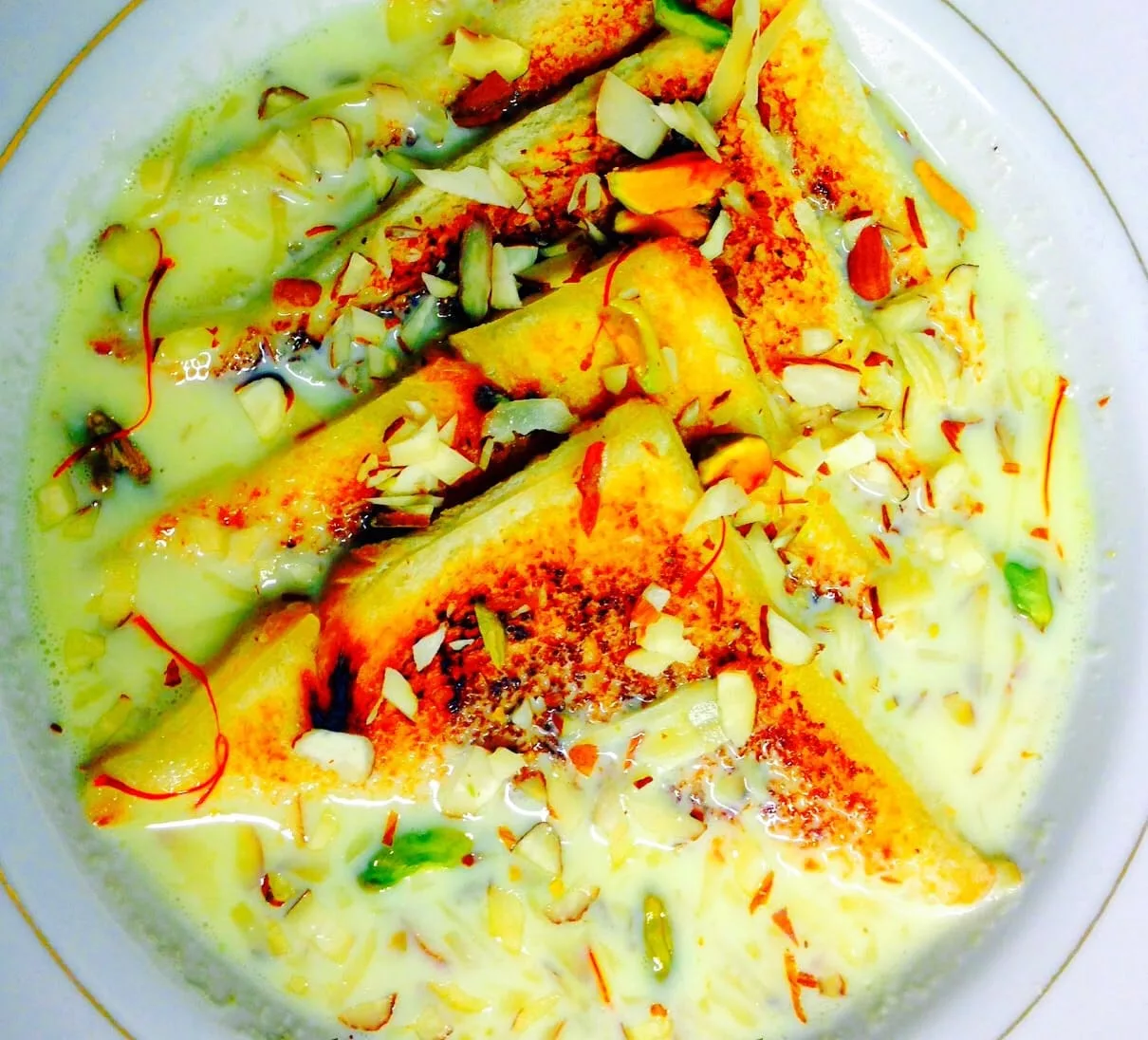
The final plate is a symphony of colors: silver, gold, green, red, yellow and purple and is insanely delicious. The aroma of lavender, roses and rare spices will transport you to the Indian subcontinent in the days of the Rajas in all their splendor!
A Dessert Fit for an Emperor’s Table
Shahi Tukda — literally a “royal piece” in Hindi and Urdu — traces its lineage to the kitchens of the Mughal Empire, the Indo-Persian dynasty that ruled much of the Indian subcontinent from the 16th through the mid-19th centuries. The Mughal court fused Central Asian and Persian cooking techniques with native Indian spices and produce, and nowhere is that fusion more decadent than in its dessert repertoire: gulab jamun, phirni, seviyan, and this bread pudding all descend from that same royal kitchen. Some food historians trace Shahi Tukda’s frying-then-soaking technique back even further, to Persian bread puddings brought east along trade and conquest routes centuries before the Mughals themselves arrived.
What sets My version apart from the everyday restaurant rendition is the sheer commitment to excess that the Maharajas would have recognized as their own. Most modern recipes stop at a simple sugar syrup soak; I insist on the full royal treatment, right down to the metals on top.
Gulkand: The Rose Petal Jam at the Heart of the Dish
The rose gulkand called for in this recipe is its own small culinary tradition. Gulkand is a preserve made by macerating fresh rose petals in sugar over weeks of sun exposure, a process historically credited to Ayurvedic and Unani medicine as much as to the kitchen — it was, and still is, prescribed as a cooling digestive tonic in addition to being eaten as a sweet. I’ve written before about how finicky most commercial gulkand can be, which is why My Indian Rice and Rose Pudding takes the unconventional step of sourcing the rose flavor from Chinese suppliers instead of Indian ones.
Rose petals as a sweet preserve are hardly unique to India, either — My Russian Rose and Rum Jam shows the same petals put to work in an entirely different Slavic context, while My Tunisian Rose Petal Harissa takes them in the opposite savory-and-fiery direction.
Varq: Eating Precious Metal
Edible metal leaf is one of those culinary curiosities that sounds far more alarming than it actually is. Silver and gold varq are hammered down to a fraction of a micron in thickness — thin enough that a stray breath will shatter a sheet — and traditionally beaten between layers of leather or vellum until they’re essentially weightless. In Ayurvedic tradition, silver varq in particular was credited with cooling and tonic properties, while gold was reserved for only the most opulent occasions, a marker of status as much as flavor, since both metals are, by design, entirely flavorless.
Modern food-grade varq sold for culinary use is manufactured to be pure enough for direct consumption, though I always recommend sourcing it specifically labeled as food-safe rather than the decorative craft-grade leaf sold for gilding frames.
Rabri and Its Cousins Across the Pudding World
The rabri that crowns this dish — milk slowly reduced until it thickens into a dense, faintly caramelized cream — belongs to a much larger family of milk-reduction desserts across South Asia. My Indian Rice Pudding relies on the very same reduction technique, using rice instead of bread as the base that soaks it up, and shares this dish’s fondness for silver foil as a finishing flourish. My Durgin-Park Indian Pudding shows a wholly unrelated but similarly named American dessert built on cornmeal and molasses instead, while My Byzantine Rice Pudding traces a milk-and-grain dessert lineage back through the Eastern Mediterranean. If saffron and rosewater are more to your taste than bread and rabri, My Persian Saffron, Rose and Pistachio Ice Cream hits the same flavor notes in frozen form.
Bring the milk to the boil in a heavy-bottomed pan. Add green cardamom powder and saffron. Remove from heat, add sugar. Keep aside.
Heat the ghee in a pan; fry the slices of bread lightly. Remove from flame, drain the excess oil. Soak the fried bread in the milk mixture for 10 minutes.
For the rabri, heat the milk and cook till it is reduced to 1/3rd. Add sugar, green cardamom powder, and saffron to the milk and stir. Remove the pan from heat and keep aside to cool.
Carefully lift the slices of bread from the milk and arrange the rose gulkand with the help of spoon, place on a serving platter.
Pour the rabri on top and garnish with almonds, pistachios, a few drops of pomegranate molasses, silver and gold foil (if using) and lavender.




this is sooo beautiful and tastes delicious. took it to a housewarming party…serves about 4-6
Karin – I’m so glad you enjoyed my recipe! 😀
lots of oriental and m. eastern and indian groceries here!
Outstanding! 🙂 please do post a picture if you took one, I’m sure the Citizens would love to see the end result of your labors!
Karin – The Food Dictator is also highly impressed you had the necessary ingredients onhand to make the recipe! 🙂
Sorry no photo. Maybe next time!
Karin – please do, I’ll add it as the official photo for the recipe with a credit to you! 🙂